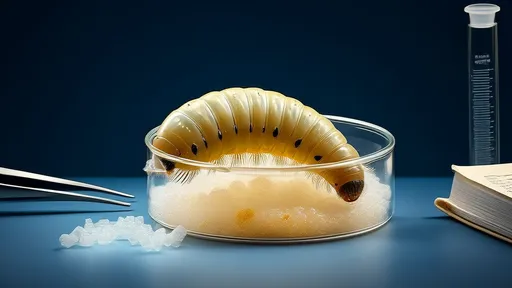
In a groundbreaking discovery that could revolutionize waste management, scientists have identified a surprising ally in the fight against plastic pollution: the humble mealworm. Researchers have found that the gut bacteria of these larvae can effectively break down polystyrene, one of the most stubborn and environmentally persistent plastics. This finding opens new possibilities for addressing the global plastic crisis through biological means.
The study, conducted by a team of environmental microbiologists, reveals that mealworms (Tenebrio molitor) possess unique intestinal microbes capable of digesting polystyrene foam. This common packaging material, often referred to by the brand name Styrofoam, has long posed significant challenges for recycling efforts due to its chemical stability and bulkiness. The worms not only consume the plastic but convert it into biodegradable waste, offering a potential solution to one of modern waste management's most persistent problems.
How does this remarkable process work? The key lies in the mealworm's digestive system, which hosts specific bacterial strains that enzymatically break the polymer chains in polystyrene. Through a series of complex biochemical reactions, these microorganisms transform the plastic into carbon dioxide, microbial biomass, and fecal matter that shows no signs of toxicity in preliminary tests. This natural degradation process occurs within just 24 hours of consumption, a remarkably efficient timeframe compared to conventional plastic breakdown that can take centuries.
The implications of this discovery extend far beyond academic interest. With millions of tons of polystyrene waste accumulating in landfills and oceans annually, this biological approach offers hope for developing scalable solutions. Unlike mechanical recycling which often downgrades plastic quality, or chemical processes that require significant energy inputs, this method represents a truly circular solution where waste becomes food for organisms that produce harmless byproducts.
Field tests have shown particularly promising results. In controlled experiments, mealworms fed exclusively on polystyrene not only survived but maintained healthy weights, demonstrating that they can derive nutritional value from what humans consider waste. The researchers observed that about 48% of the ingested polystyrene was converted to carbon dioxide (as would occur with any food source), while the remainder was excreted as biodegraded fragments that could potentially serve as nutrient-rich compost.
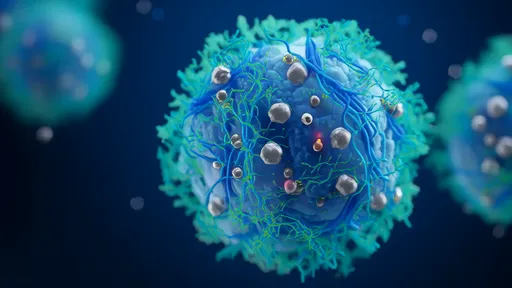
What makes this discovery even more significant is that the bacterial strains responsible for plastic degradation have been isolated and cultured outside the mealworm's digestive system. Scientists successfully replicated the degradation process in laboratory conditions using just the extracted microbes, proving that the plastic-breaking capability isn't dependent on the worm itself but rather its gut microbiome. This opens possibilities for industrial-scale applications where the bacteria could be used in bioreactors to process plastic waste without requiring mealworm farming.
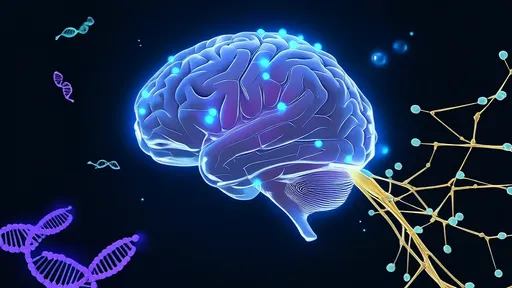
The research team is now working to identify and enhance the most effective bacterial strains. Early genomic analysis has revealed several candidate organisms that produce enzymes capable of cleaving the hydrocarbon bonds in polystyrene. By sequencing these microbial genomes and studying their enzyme structures, scientists hope to engineer more efficient versions that could accelerate the degradation process or handle other types of plastics.
Challenges remain before this solution can be implemented widely. While mealworms can process impressive amounts of plastic relative to their size (about 34-39 milligrams of polystyrene per day), scaling this up to handle global plastic waste would require massive operations. Researchers are investigating whether other insect species might host even more efficient plastic-degrading bacteria, or if the mealworm microbes can be optimized through selective breeding or genetic modification.
Environmental scientists caution that this biological solution shouldn't be seen as permission to continue current levels of plastic production and disposal. Even if perfected, plastic-eating microbes would need to be part of a comprehensive strategy that includes reduced plastic use, improved recycling systems, and better product design. The mealworm discovery does, however, provide a crucial tool for dealing with existing plastic pollution, particularly in environments where traditional collection and recycling methods are impractical.
Looking ahead, the research team plans to explore whether similar microbial mechanisms might work on other problematic plastics like polyethylene (used in shopping bags) or polypropylene (common in food containers). Preliminary evidence suggests that the enzymatic pathways in mealworm guts might be adaptable to different polymer types, potentially making this approach applicable to a wider range of plastic waste. As the world grapples with the consequences of decades of plastic accumulation, nature may have provided an unexpected solution hidden in the digestive tract of an unassuming insect.
By /Aug 7, 2025

By /Aug 7, 2025
By /Aug 7, 2025
By /Aug 7, 2025
By /Aug 7, 2025
By /Aug 7, 2025
By /Aug 7, 2025
By /Aug 7, 2025
By /Aug 7, 2025
By /Aug 7, 2025
By /Aug 7, 2025
By /Aug 7, 2025
By /Aug 7, 2025
By /Aug 7, 2025
By /Aug 7, 2025
By /Aug 7, 2025
By /Aug 7, 2025
By /Aug 7, 2025
By /Aug 7, 2025
By /Aug 7, 2025