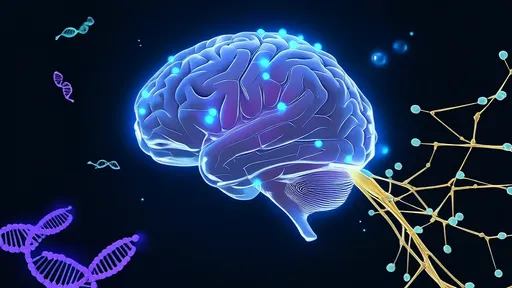
In a groundbreaking discovery that could reshape our understanding of long-term memory formation, scientists have identified the Arc protein as a crucial molecular player in the process of memory consolidation. This finding, emerging from decades of neuroscience research, provides unprecedented insights into how fleeting experiences transform into enduring memories within the human brain.
The story of Arc protein begins with its accidental discovery during studies of immediate-early genes – those that activate rapidly in response to neural activity. Unlike other proteins in this category, Arc exhibited peculiar behavior that hinted at a far more significant role in cognitive processes. Researchers observed that Arc levels surge precisely when memories are being formed and stabilized, suggesting its involvement in the biological machinery of memory preservation.
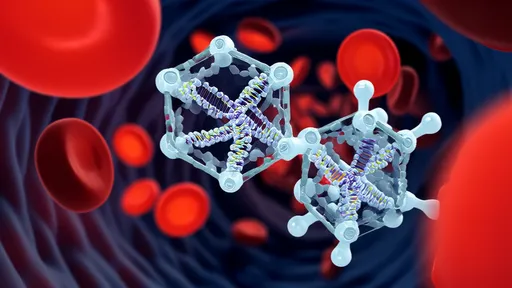
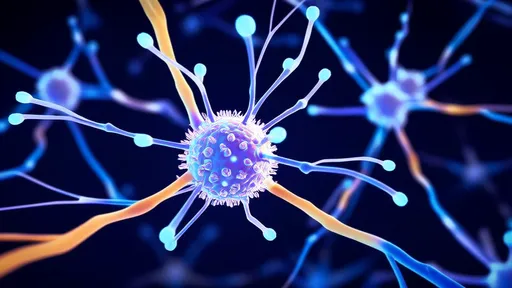
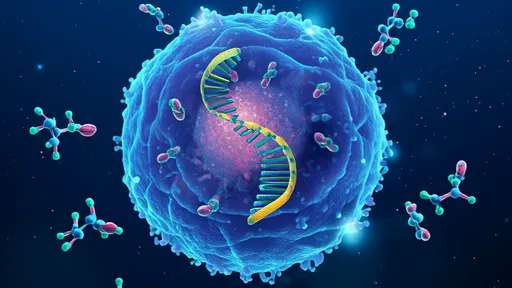
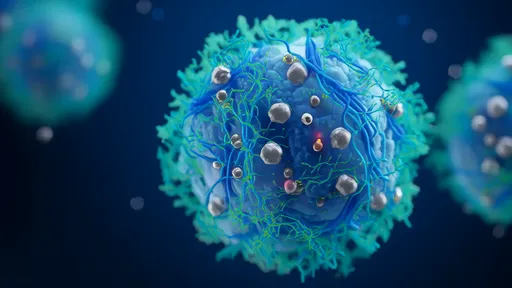
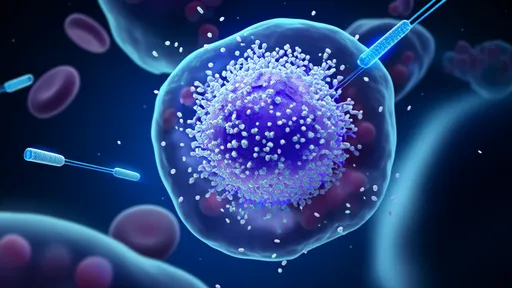
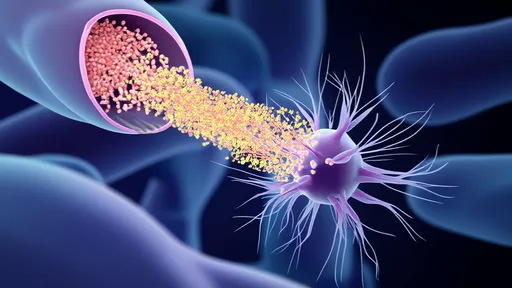
What makes Arc truly remarkable is its dual functionality in memory storage. The protein appears to operate through two distinct but complementary mechanisms. First, it regulates synaptic plasticity by modulating the strength of connections between neurons. Second, and perhaps more astonishingly, Arc can form virus-like capsids that transport RNA between cells. This unexpected discovery revealed a previously unknown form of neural communication essential for memory consolidation.
The implications of Arc's role extend far beyond basic neuroscience. Understanding how this protein facilitates long-term memory storage opens new avenues for treating memory-related disorders. In Alzheimer's disease, for instance, researchers have noted significantly reduced Arc protein levels. Similarly, abnormalities in Arc expression have been linked to various neurological conditions including fragile X syndrome and autism spectrum disorders.
Recent experiments with animal models have demonstrated the protein's critical importance. When researchers blocked Arc production in mice, the animals could form short-term memories but failed to retain them long-term. Conversely, enhancing Arc function improved memory retention and recall. These findings strongly suggest that Arc serves as a molecular "glue" that stabilizes memory traces in neural networks over time.
The discovery of Arc's role in memory also challenges some long-held assumptions about neuroplasticity. Traditional models emphasized structural changes at synapses as the primary mechanism for memory storage. While this remains true, the Arc findings reveal an additional layer of complexity – the protein appears to coordinate both structural and functional changes across entire neural circuits, creating a more robust and distributed memory representation.
One of the most intriguing aspects of Arc biology is its evolutionary origin. The protein's ability to form capsids and transfer genetic material between cells bears striking resemblance to viral behavior. Some scientists speculate that ancestral viruses may have contributed genetic material to vertebrate genomes that eventually evolved into memory-related genes like Arc. This viral connection adds a fascinating dimension to our understanding of how complex cognitive functions emerged through evolution.
Practical applications of this research are already beginning to emerge. Several pharmaceutical companies are investigating compounds that can modulate Arc expression or activity as potential treatments for memory disorders. Early-stage clinical trials are exploring whether boosting Arc function can help restore memory capabilities in patients with early Alzheimer's disease. Other researchers are examining whether Arc manipulation could enhance normal memory function, though such applications raise important ethical considerations.
The discovery also has significant implications for artificial intelligence research. Understanding how biological systems like Arc mediate information storage could inspire new approaches to machine learning and neural network design. Some AI researchers are already developing algorithms that mimic aspects of Arc's dual mechanism of action, hoping to create more efficient and stable memory systems for artificial neural networks.
Despite these exciting developments, many questions about Arc remain unanswered. Scientists are still working to understand precisely how the protein's various functions interact during memory formation. Other open questions include how Arc activity is regulated in different brain regions, and how its function changes with aging. Ongoing research using advanced techniques like single-cell sequencing and super-resolution microscopy promises to shed more light on these mysteries in coming years.
The identification of Arc as a key mediator of memory consolidation represents a major milestone in neuroscience. It provides a concrete molecular target for understanding and potentially manipulating the memory process. As research continues, this humble protein may hold the key to unlocking some of the brain's most profound secrets about how we retain our experiences and, ultimately, our identities.
Looking ahead, the Arc story exemplifies how fundamental biological research can yield unexpected insights with far-reaching consequences. What began as a curious observation about gene expression patterns has blossomed into a transformative understanding of memory itself. As scientists continue to unravel Arc's mysteries, we move closer to answering one of neuroscience's most fundamental questions: how does the brain turn the ephemeral into the enduring?
By /Aug 7, 2025

By /Aug 7, 2025
By /Aug 7, 2025
By /Aug 7, 2025
By /Aug 7, 2025
By /Aug 7, 2025

By /Aug 7, 2025
By /Aug 7, 2025

By /Aug 7, 2025
By /Aug 7, 2025
By /Aug 7, 2025
By /Aug 7, 2025
By /Aug 7, 2025

By /Aug 7, 2025
By /Aug 7, 2025
By /Aug 7, 2025
By /Aug 7, 2025

By /Aug 7, 2025
By /Aug 7, 2025
By /Aug 7, 2025