Ant Agricultural AI": Collective Decision-Making in Leaf-Cutting Ants' Fungal Cultivation Optimization

Aug 7, 2025 By

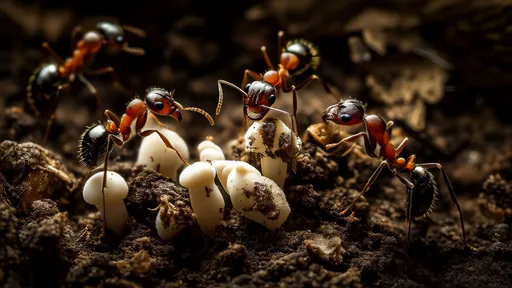
In the dense rainforests of Central and South America, a remarkable agricultural system has thrived for over 50 million years—one operated not by humans, but by tiny six-legged farmers. Leafcutter ants (Atta and Acromyrmex species) have developed sophisticated fungal cultivation techniques that put many human agricultural practices to shame. Recent research reveals how these insects employ what scientists are calling "swarm AI" to collectively optimize their fungal gardens through decentralized decision-making.

The leafcutter ant's agricultural enterprise begins with its namesake behavior—precisely cutting fragments from living plants. But this is no random defoliation. Each ant acts as a sensory node in a distributed network, assessing vegetation quality through chemical cues and physical properties. What appears as chaotic cutting actually represents a continuous optimization process where the colony samples diverse plant sources to maintain optimal nutritional balance for their fungal cultivars.

These ant farmers don't actually eat the leaves they harvest. Instead, they process the vegetation into a compost that feeds their true crop—a specialized fungus (Leucoagaricus gongylophorus) that has co-evolved with the ants for millennia. The fungus serves as the colony's primary food source, producing nutrient-rich swellings called gongylidia that the ants harvest. This mutualistic relationship represents one of nature's most ancient and successful agricultural systems.

What's particularly fascinating is how colonies adapt their harvesting strategies. Research shows that when presented with novel plant species, a colony will initially sample small quantities while carefully monitoring fungal growth responses. Worker ants tending the fungal gardens serve as living biosensors, detecting subtle changes in fungal health through chemical and tactile cues. Information about substrate quality spreads through the colony not via centralized control, but through distributed feedback mechanisms.

The decision-making process resembles a biological version of artificial intelligence algorithms. Individual ants function like processing units in a neural network, each contributing local information that collectively informs the colony's harvesting choices. When certain plant materials prove beneficial to fungal growth, recruitment to those sources increases through pheromone trails. Conversely, harmful substrates are abandoned through the absence of positive reinforcement—a classic case of distributed optimization.

Scientists have identified several remarkable parallels between ant colony decision-making and machine learning systems. The colony's sampling strategy mirrors the "explore-exploit" algorithm in AI—balancing experimentation with new plant sources against exploitation of known good substrates. This dynamic balance allows colonies to adapt to changing environments while maintaining stable fungal production.

The agricultural sophistication extends to waste management. Leafcutter ants maintain specialized refuse chambers where they deposit spent substrate and potentially harmful microbes. These chambers are carefully positioned away from fungal gardens and nurseries, demonstrating an understanding of disease prevention that rivals human agricultural practices. Some species even employ antibiotic-producing bacteria to protect their fungal crops, creating a multi-tiered symbiosis.

Recent experiments using micro-CT scanning have revealed the intricate architecture of fungal gardens. The ants arrange the compost in a specific spongelike structure that optimizes air flow and humidity—critical factors for fungal health. This architecture emerges from simple rules followed by individual workers, yet produces a highly efficient macro-scale environment.

What can human agriculture learn from these tiny farmers? Researchers suggest that ant colonies demonstrate principles of resilient, decentralized agricultural systems. Their continuous small-scale testing of new substrates while maintaining core food production provides a model for sustainable innovation. The absence of centralized control in ant colonies makes their agricultural system robust to individual failures—a feature that human smart farming systems might emulate.

The leafcutter ant's agricultural success stems from a perfect integration of individual simplicity and collective intelligence. Each ant follows basic behavioral rules, but together they create a sophisticated farming operation that has survived geological epochs. As we face challenges of food security and sustainable agriculture, these ancient insect farmers may hold valuable lessons about collective problem-solving and ecological harmony.

Ongoing research aims to decode the precise communication mechanisms that allow such precise coordination. Scientists are particularly interested in how error correction happens in the system—how colonies identify and rectify poor harvesting decisions. Early evidence suggests a form of "social proofing" where ants preferentially follow trails that show high traffic, creating positive feedback loops for optimal sources.

The agricultural practices of leafcutter ants represent one of nature's most extraordinary examples of distributed intelligence. Without blueprints, leaders, or conscious planning, these tiny creatures maintain complex agricultural systems that sustainably feed colonies of millions. As we develop smarter agricultural technologies, perhaps the most advanced AI system we should study is the one that's been operating successfully in tropical forests for tens of millions of years.
Recommend Posts
Biology

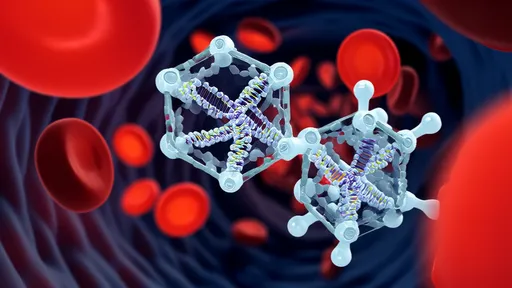
DNA Nanocars": Self-Propelled CRISPR Targeted Delivery System

By /Aug 7, 2025

In a groundbreaking development at the intersection of nanotechnology and gene editing, scientists have engineered a self-propelled DNA "nanocar" capable of delivering CRISPR-Cas9 payloads with unprecedented precision. This biomolecular vehicle, constructed entirely from folded DNA strands, represents a paradigm shift in targeted therapeutic delivery—navigating the bloodstream like a microscopic courier programmed to seek specific cell types. The innovation lies not just in its cargo, but in its autonomous movement powered by enzymatic fuel, enabling it to traverse biological barriers that traditionally stymie drug delivery systems.
Biology

Forest Carbon Breathing": Monitoring Tree Photosynthetic Efficiency Dynamics with LiDAR

By /Aug 7, 2025

In the quiet expanse of a temperate rainforest, an unseen exchange governs the planet’s health. Trees, those silent sentinels of carbon, engage in a daily dance of absorption and release—a rhythm scientists now call "carbon respiration." For decades, measuring this process relied on crude approximations or invasive methods. But a technological revolution is underway: LiDAR (Light Detection and Ranging) is piercing the canopy veil, revealing photosynthesis in motion.
Biology

Protein Smart Key": AI-Designed Carriers to Penetrate the Blood-Brain Barrier

By /Aug 7, 2025

In a groundbreaking advancement that could revolutionize drug delivery to the brain, researchers have harnessed artificial intelligence to design protein-based "smart keys" capable of penetrating the blood-brain barrier (BBB). This biological fortress, which protects the brain from harmful substances, has long been a formidable obstacle in treating neurological disorders. The new approach combines computational biology with deep learning algorithms to create tailored carriers that may finally unlock targeted therapies for Alzheimer's, Parkinson's, and brain cancers.
Biology

Pacemaker of Consciousness: Regulation of Arousal Threshold by Thalamic Reticular Nucleus"

By /Aug 7, 2025

In a groundbreaking study that challenges conventional understanding of sleep-wake regulation, neuroscientists have identified the thalamic reticular nucleus (TRN) as a biological metronome governing consciousness thresholds. This almond-shaped structure, long considered a mere relay filter, now emerges as the brain's master conductor orchestrating the delicate balance between wakefulness and sleep through precise rhythmic control.
Biology

Gut-Brain 'Superhighway': Vagus Nerve Transmits Microbiota Signals in 10 Seconds"

By /Aug 7, 2025

In a groundbreaking discovery that rewrites our understanding of gut-brain communication, researchers have identified a 10-second microbial superhighway via the vagus nerve. This neural express lane shuttles biochemical signals from intestinal microbiota to the brain at unprecedented speeds, challenging long-held assumptions about the sluggish pace of body-to-brain signaling.
Biology

Epigenetic Eraser: Cellular Clock Reset" Reverses Signs of Aging

By /Aug 7, 2025

In a groundbreaking development that challenges our understanding of aging, scientists have unveiled a revolutionary approach to reversing cellular aging markers through epigenetic reprogramming. The research, spearheaded by an international team of biologists, demonstrates how carefully targeted interventions can effectively "reset" the biological clock of cells without erasing their identity.
Biology

AI Pathogen Radar": Predicting the Cross-species Risk of Zoonotic Diseases

By /Aug 7, 2025

The emergence of zoonotic diseases—pathogens that jump from animals to humans—has become a critical concern in global public health. From Ebola to COVID-19, these cross-species infections have demonstrated their potential to trigger devastating pandemics. Now, a groundbreaking AI-driven tool, dubbed the "Pathogen Radar," is offering scientists a powerful new way to predict and mitigate these risks before they spiral out of control.
Biology

Pain 'Neuromap': Mapping the Specific Spinal Circuits of Chronic Pain"

By /Aug 7, 2025

Chronic pain remains one of medicine's most perplexing challenges, affecting millions worldwide with often devastating consequences. For decades, researchers have grappled with understanding how the nervous system processes and perpetuates persistent pain signals. Now, a groundbreaking study published in Nature Neuroscience has mapped specific spinal cord circuits responsible for different types of chronic pain, offering unprecedented insights into this debilitating condition.
Biology

Ant Agricultural AI": Collective Decision-Making in Leaf-Cutting Ants' Fungal Cultivation Optimization

By /Aug 7, 2025

In the dense rainforests of Central and South America, a remarkable agricultural system has thrived for over 50 million years—one operated not by humans, but by tiny six-legged farmers. Leafcutter ants (Atta and Acromyrmex species) have developed sophisticated fungal cultivation techniques that put many human agricultural practices to shame. Recent research reveals how these insects employ what scientists are calling "swarm AI" to collectively optimize their fungal gardens through decentralized decision-making.
Biology

Microorganism 'Plastic Buster': Gut Bacteria of Yellow Mealworms Degrade Polystyrene"

By /Aug 7, 2025

In a groundbreaking discovery that could revolutionize waste management, scientists have identified a surprising ally in the fight against plastic pollution: the humble mealworm. Researchers have found that the gut bacteria of these larvae can effectively break down polystyrene, one of the most stubborn and environmentally persistent plastics. This finding opens new possibilities for addressing the global plastic crisis through biological means.
Biology

Coral 'Symbiosis Alert': Algae Fluorescence Signals to Forewarn Bleaching Events"

By /Aug 7, 2025

In a groundbreaking discovery that could revolutionize coral reef conservation, scientists have identified a novel early warning system for coral bleaching events—fluorescent signals emitted by stressed symbiotic algae. The phenomenon, dubbed the "symbiotic alarm," occurs when coral-hosted algae begin emitting intense fluorescent light under thermal stress, often weeks before visible bleaching occurs. This biological distress flare may provide conservationists with a critical window to implement protective measures before irreversible damage takes hold.
Biology

Memory Consolidator": Arc Protein Mediates Long-Term Memory Storage

By /Aug 7, 2025

In a groundbreaking discovery that could reshape our understanding of long-term memory formation, scientists have identified the Arc protein as a crucial molecular player in the process of memory consolidation. This finding, emerging from decades of neuroscience research, provides unprecedented insights into how fleeting experiences transform into enduring memories within the human brain.
Biology

Cancer Dormancy Lock": Tumor Microenvironment-Mimicking Materials to Suppress Metastasis

By /Aug 7, 2025

In a groundbreaking development that could reshape cancer treatment paradigms, researchers have unveiled a novel biomimetic material designed to mimic the tumor microenvironment and keep metastatic cells in a dormant state. Dubbed the "dormancy lock," this approach represents a radical departure from traditional therapies that aggressively target proliferating cancer cells, instead focusing on controlling the deadly process of metastasis responsible for 90% of cancer-related deaths.
Biology

Plant 'Sonar Defense': Corn Emits Ultrasonic Waves to Repel Armyworms"

By /Aug 7, 2025

In a groundbreaking discovery that blurs the lines between botany and bioacoustics, researchers have uncovered evidence that corn plants emit ultrasonic "distress calls" when under attack by fall armyworm larvae. This sophisticated defense mechanism, detected through specialized microphones, reveals an entirely new dimension of plant communication – one that operates at frequencies beyond human hearing but within the perceptual range of their insect predators.
Biology

Senolytic Therapy: Lysosome Activator Targeted Clearance Technology"

By /Aug 7, 2025

The field of aging research has witnessed a groundbreaking advancement with the development of lysosomal activator-based targeted clearance technology, a novel approach to eliminating senescent cells. Often referred to as the "clearance technique" for aging cells, this method leverages the power of lysosomes—the cellular recycling centers—to selectively destroy cells that have ceased to divide and contribute to age-related dysfunction. Unlike traditional senolytic drugs, which broadly induce apoptosis, this strategy activates lysosomal pathways to achieve precise and efficient removal of senescent cells, opening new avenues for treating age-related diseases.
Biology

Energy Stewards of Glial Cells: Mechanisms Regulating Neuronal Mitochondrial Distribution"

By /Aug 7, 2025

In a groundbreaking study that reshapes our understanding of brain metabolism, researchers have uncovered the pivotal role of glial cells as "energy stewards" in the nervous system. The findings reveal an intricate molecular dialogue between astrocytes and neurons that governs the distribution of mitochondria—the cellular powerhouses—to meet localized energy demands. This discovery challenges the long-held neuron-centric view of brain energetics, painting glia as active architects of neural metabolic networks rather than passive support cells.
Biology

Mitochondrial Charging Station": Engineering Extracellular Vesicles for Delivering Healthy Mitochondria

By /Aug 7, 2025

In a groundbreaking development that could revolutionize cellular medicine, scientists have pioneered a novel approach to mitochondrial therapy using engineered exosomes as delivery vehicles for healthy mitochondria. This innovative strategy, often referred to as "mitochondrial charging stations," addresses the root cause of numerous degenerative diseases by replenishing damaged cellular power plants with functional counterparts.
Biology

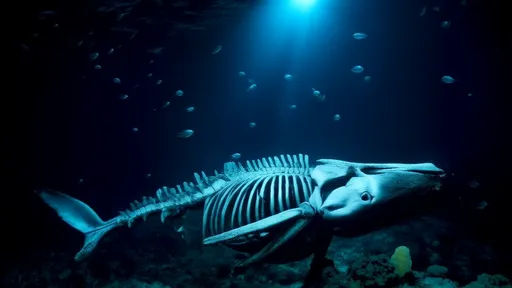
Whale Fall as a Viral Treasure Trove": Deep-Sea Carcasses Foster New Diversity of Bacteriophages

By /Aug 7, 2025

The ocean floor holds secrets far beyond human imagination, and among its most enigmatic phenomena lies the "whale fall"—a term describing the carcass of a deceased whale sinking to the abyssal plains. Recent research has uncovered that these massive biological remnants serve as unexpected hotspots for viral evolution, particularly for bacteriophages, the viruses that infect bacteria. Scientists now refer to these sites as "viral goldmines," where novel phage diversity flourishes in ways never before documented.
Biology

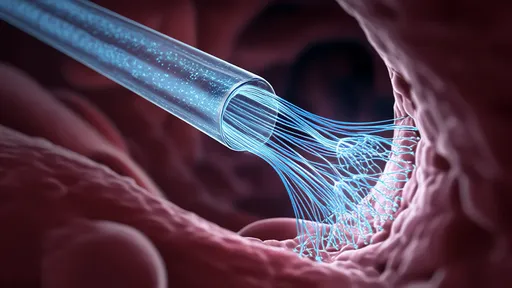
Neuro Optical Conduction Repair": Hydrogel Optical Fiber Regeneration of Damaged Nerves

By /Aug 7, 2025

In a groundbreaking development that could revolutionize nerve repair, scientists have pioneered a novel approach using hydrogel optical fibers to guide the regeneration of damaged nerves. This innovative technique, often referred to as "neural photoconductive repair," merges the principles of optogenetics with advanced biomaterials to create a scaffold that not only supports nerve growth but also directs it with unprecedented precision. The implications for patients suffering from traumatic nerve injuries or neurodegenerative diseases are profound, offering hope where traditional treatments have fallen short.
Biology

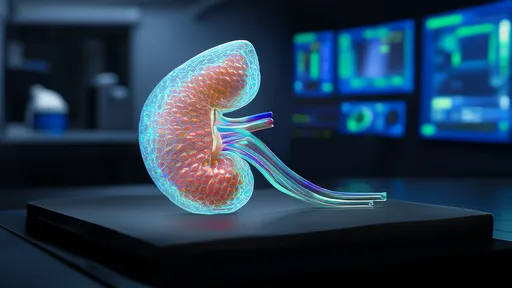
Organ Stealth Coating": Biomimetic Materials to Shield Immune Rejection Reactions

By /Aug 7, 2025

In a groundbreaking advancement for transplant medicine, researchers have turned to nature’s playbook to solve one of the most persistent challenges in organ transplantation: immune rejection. Drawing inspiration from biological systems that evade detection, scientists are developing "invisibility cloak" coatings for donor organs using biomimetic materials. These innovations could revolutionize transplant outcomes by shielding foreign tissues from the host’s immune system without the need for lifelong immunosuppressive drugs.